



Seasonal businesses live in a constant cycle of ramping up and winding down. Whether it is retail during the holidays, tourism in peak travel months, or agriculture during harvest season, workforce fluctuations create a unique challenge: managing access to systems, data, and tools safely and efficiently.
This is where Role-Based Access Control (RBAC) becomes not just useful, but essential.
If your company hires temporary workers, contractors, or short-term staff, waiting to implement RBAC is a risk you cannot afford. The earlier you start, the more secure, scalable, and efficient your operations become.
What Is Role-Based Access Control?


Why Seasonal Companies Face Higher Risk
Seasonal companies are uniquely vulnerable to access-related security issues. Here’s why:
1. High Employee Turnover
Seasonal hiring means frequent onboarding and offboarding. Without a structured system, access permissions can easily be overlooked, leaving former employees with active credentials.


2. Temporary Workforce
Contractors and temporary staff often require limited access. Granting too much access creates unnecessary exposure.
3. Time Pressure
During peak seasons, speed matters. Businesses often prioritize rapid onboarding over security, increasing the chance of human error.
4. Distributed Teams
Seasonal workers may operate across multiple locations or remote environments, complicating access control.
Without RBAC, these challenges can lead to unauthorized access, data breaches, and compliance violations.
The Business Case for RBAC in Seasonal Operations
- Faster Onboarding & Offboarding
RBAC simplifies user management dramatically. Instead of assigning permissions one by one, administrators assign roles.
This means new hires can be onboarded in minutes, and when employees leave, removing a role instantly revokes all associated access.
RBAC also streamlines onboarding and offboarding processes, reducing administrative burden and improving efficiency.
For seasonal companies, this is a game changer. - Improved Security & Reduced Risk
RBAC enforces the principle of least privilege, meaning users only get access to what they need and nothing more.

This reduces:
- Insider threats
- Accidental data exposure
- Unauthorized access
By limiting excessive permissions and preventing “privilege creep,” RBAC strengthens overall cybersecurity posture.
For companies handling customer data, payment systems, or proprietary information, this level of control is critical.
3. Operational Efficiency at Scale
Managing individual permissions becomes chaotic as your workforce grows. RBAC replaces that complexity with structured roles.This leads to:
- Fewer errors
- Consistent access policies
- Easier system administration
Organizations using RBAC often see streamlined operations and reduced administrative overhead.
For seasonal businesses that scale up quickly, this efficiency is essential.
4. Better Compliance & Audit Readiness
Regulations around data protection are becoming stricter. Whether you operate in retail, healthcare, or finance, demonstrating control over user access is mandatory.
RBAC helps by:
- Providing clear access structures
- Simplifying audit trails
- Ensuring consistent policy enforcement
This makes compliance easier and audits less stressful.
5. Cost Savings Over Time
While implementing RBAC requires planning, it ultimately reduces costs by:
- Minimizing IT workload
- Reducing security incidents
- Improving resource efficiency
Efficiency gains from RBAC can translate into lower operational costs and better use of system resources.
For seasonal companies with tight margins, this matters.
Why You Should Start Now, Not Later

1. Peak Season Is the Worst Time to Implement
Trying to roll out RBAC during your busiest season is a recipe for disruption. Systems are under pressure, teams are stretched, and mistakes are more likely.
Implementing now, during a slower period, allows you to:
- Define roles carefully
- Test access policies
- Train staff
2. Security Threats Don’t Wait
Cyber threats are constant. Waiting until a breach happens is far more costly than proactive implementation.
RBAC minimizes the risk of unauthorized access and protects sensitive data from day one.
3. Scalability Requires Preparation
RBAC is most effective when it is designed thoughtfully. Starting early allows you to build a scalable framework that grows with your business.
4. Competitive Advantage
Companies that manage access efficiently can scale faster, onboard employees quicker, and operate more securely than competitors still relying on manual processes.
How RBAC Works in a Seasonal Business
Let’s break it down with a simple example:
A retail company hires seasonal staff for the holiday rush. With RBAC, they create roles such as:
- Cashier
- Floor Associate
- Inventory Manager
- Store Manager
Each role has predefined permissions:
- Cashiers access POS systems only
- Inventory Managers access stock databases
- Managers access reporting and financial tools
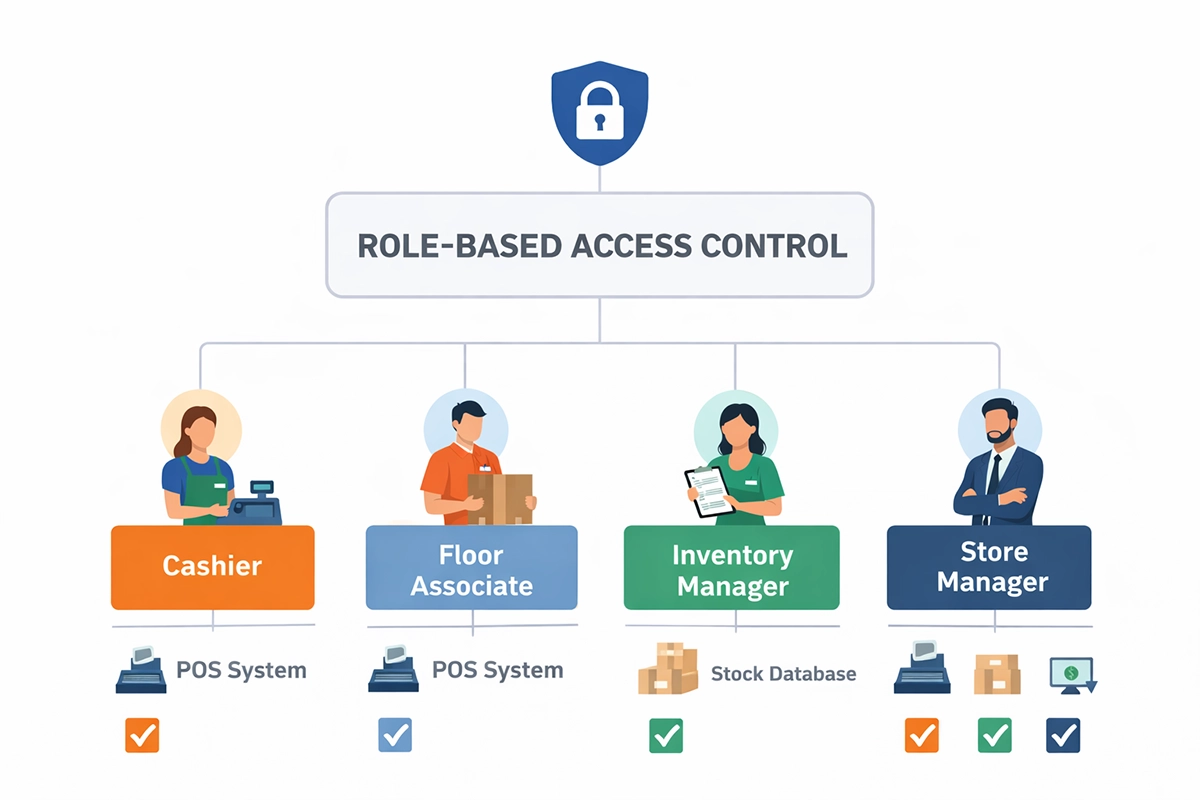
When new employees are hired, they are assigned a role. When the season ends, removing the role removes access instantly.
This structured approach eliminates confusion and ensures consistency.
Best Practices for Implementing RBAC
1. Define Roles Clearly
Start by mapping out job functions. Each role should reflect real responsibilities, not vague titles.
2. Follow the Principle of Least Privilege
Only grant access necessary for the role. Avoid “just in case” permissions.
3. Use Role Hierarchies
Create parent and child roles where appropriate. For example:
- Seasonal Staff
- Senior Seasonal Staff
- Supervisors
This reduces duplication and simplifies management.
4. Regularly Review Roles
Seasonal businesses change. Review roles periodically to ensure they still align with operations.
5. Automate Where Possible
Integrate RBAC with identity management systems to automate onboarding and offboarding.
6. Audit Access Frequently
Regular audits ensure that permissions remain accurate and compliant.
Common mistakes to avoid:
- Overcomplicating roles
- Granting excessive permissions
- Failing to remove access promptly
- Ignoring audits
- Delaying implementation
RBAC works best when it is simple, consistent, and actively maintained.
The Future of Access Control for Seasonal Companies

As businesses increasingly rely on cloud systems, remote work, and digital tools, access control becomes more complex.
RBAC provides a foundation that can evolve with your organization. It can also integrate with more advanced models like attribute-based access control for even finer control.
But the key is starting early.
Seasonal companies that adopt RBAC now will be better prepared for growth, security challenges, and regulatory demands in the future.
Set the Foundation Now
Seasonal businesses operate in fast-moving environments where efficiency and security must go hand in hand. Role-Based Access Control offers a structured, scalable way to manage both.
By implementing RBAC now, you:
- Reduce security risks
- Improve operational efficiency
- Simplify workforce management
- Prepare for future growth
Waiting only increases complexity and risk. The smartest move is to build your access control foundation before your next busy season begins. Contact Computer Headquarters today for help implementing Role-Based Access Controls!